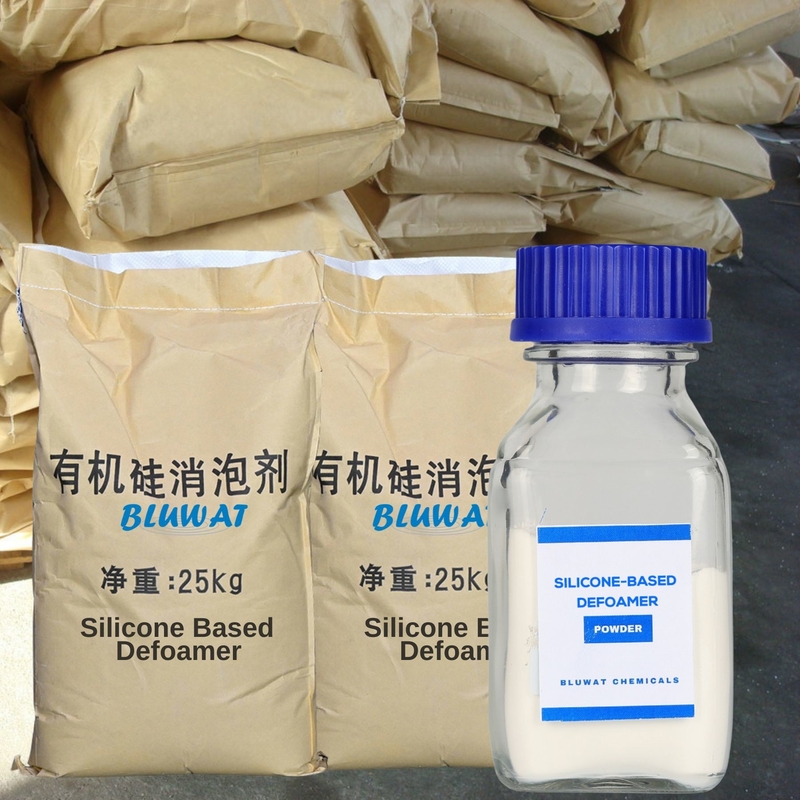
Can Be Dispersed In Various Systems Or Water With Stirring
Highlight:
Petroleum Defoaming Agent
,
Industrial Use Defoaming Agent
,
Cleaning Defoaming Agent
Product Description
Special Defoamer for Powder or Non-Aqueous Systems
Classification:
Powdered Silicone-Based Defoamer
Active Ingredients:
Modified Polysiloxane, Polyether, Dispersant
Physical Properties:
Appearance: White powder or flocculent material
pH (1% aqueous solution): 7-10
Loss on drying: ≤4%
Solubility: Can be dispersed in various systems or water with stirring
Product Description:
This special defoamer is developed for powder or non-aqueous systems. It is mainly used in highly alkaline washing solutions, strongly acidic chemical systems, petroleum industry mud defoaming, new cement-based powder building materials, textile adhesives, industrial cleaning agents, laundry detergents, soap manufacturing, and other applications requiring low-foam performance. It can also be used in the fermentation industry. The product is non-toxic and has a wide range of applications.
Application:
This powdered silicone-based defoamer is widely used in various industries, offering effective foam control in multiple applications:
Chemical Processing: Suitable for highly alkaline and acidic systems, including industrial cleaning agents and metalworking fluids.
Textile & Detergents: Used in textile adhesives, laundry detergents, soaps, and industrial cleaning agents to minimize foam.
Oil & Gas Industry: Controls foam in drilling muds, petroleum processing, and refinery operations.
Construction Materials: Reduces foam in cement-based powders, dry-mix mortars, and concrete additives.
Fermentation & Biotechnology: Ensures smooth operation in food processing, fermentation tanks, and bioreactors.
Versatile Formulation: Works efficiently in both powdered and non-aqueous systems, offering easy dispersibility and non-toxic properties.
Usage Instructions:
Depending on the foaming characteristics of different industries, the typical dosage ranges from 0.5% to 2%, and in some cleaning agent applications, it may be added up to 4%. It can be directly added at various process stages and should be evenly mixed after addition.