logo
Good price  online

products details

Created with Pixso. Home Created with Pixso. Products Created with Pixso.
Polyelectrolyte Flocculant
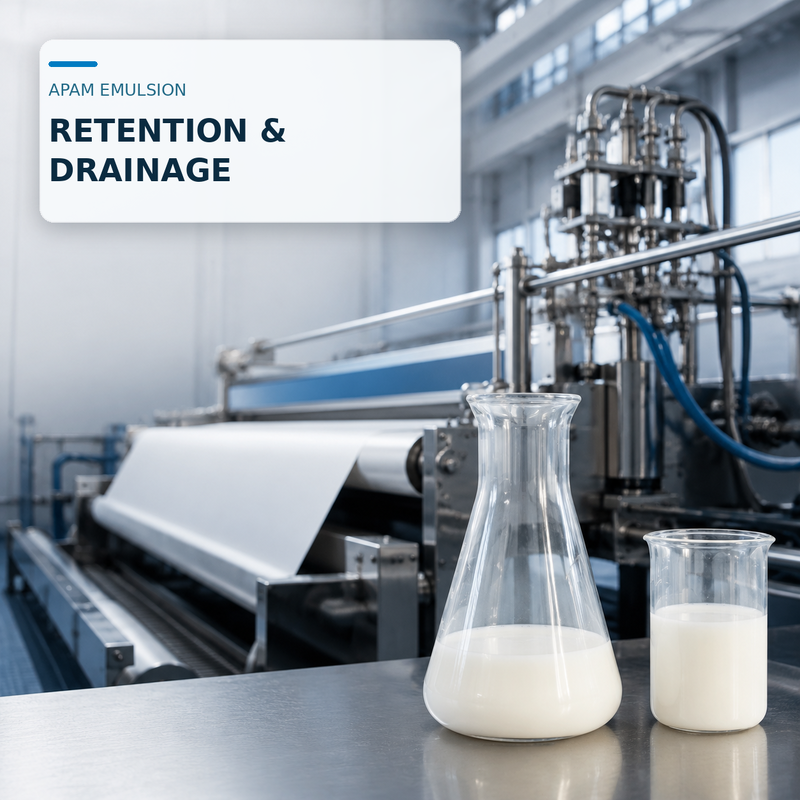
Created with Pixso. APAM Emulsion Retention and Drainage Aid for Papermaking

APAM Emulsion Retention and Drainage Aid for Papermaking

Brand Name: BLUWAT
Model Number: Blufloc Emulsion
MOQ: 1000kgs
Price: negotiable
Delivery Time: 5-10days
Detail Information
Place of Origin:
China
Certification:
ISO9001
Product Name:
Anionic Polyacrylamide Emulsion
Brand Name:
BluFloc
Abbreviation:
APAM Emulsion
Product Category:
Water-Soluble Polymer Flocculant
Chemical Type:
Anionic Acrylamide Copolymer
Physical Form:
Liquid Emulsion
Available Formulations:
Oil-Based Emulsion And Water-Based Emulsion
Molecular Weight:
Very High
Anionic Charge Degree:
Medium To High
Solubility:
Dispersible And Soluble In Water After Proper Dilution
Main Functions:
Flocculation, Clarification, Sedimentation, Thickening And Solid-Liquid Separation
Grade:
Industrial Grade
Manufacturer:
Yixing Bluwat Chemicals Co., Ltd.
Customization:
Molecular Weight And Anionic Charge Density Available Upon Request
Packaging Details:
30kgs, 50kgs, 250kgs, 1250kgs drums
Highlight:

APAM emulsion papermaking aid

,

polyelectrolyte flocculant drainage aid

,

papermaking retention aid emulsion

Product Description
Blufloc Anionic PAM Emulsion

Anionic PAM Emulsion for Papermaking Retention and Drainage

Evaluate EWA 7520 and EA 6520 as anionic bridging components in selected dual-polymer wet-end programs, with whole-sheet quality and machine runnability as the decision basis.

Very-High Molecular Weight Selected Dual-Polymer Systems Retention and Drainage Controlled Wet-End Trials

Application Snapshot

  • ProductAnionic PAM Emulsion
  • GradesEWA 7520 and EA 6520
  • RoleAnionic wet-end bridging component
  • SelectionFurnish, charge, shear, and sheet-performance trials
Product Introduction

Retention Chemistry Is a System, Not a Single Additive

Anionic PAM may work in selected dual-polymer or cationic-demand-controlled programs, but it is not a universal substitute for a cationic retention aid. The preferred chemistry depends on furnish charge, fillers, dissolved and colloidal substances, wet-end additives, chemical sequence, addition point, and shear.

A successful program must improve first-pass retention and drainage without harming formation, strength, sizing, deposits, machine cleanliness, breaks, or finished-paper quality.

Blufloc APAM Emulsion

Blufloc APAM emulsion can be evaluated as an anionic bridging component in selected papermaking retention and drainage programs.

EWA 7520 and EA 6520 are screened together with cationic starch, coagulant, microparticle, furnish charge, chemical sequence, addition point, and the machine's actual shear history.

Application Challenges

Balance Retention, Drainage, Formation, and Runnability

A wet-end program that improves one number can still reduce paper quality or machine stability. Polymer selection therefore requires a system-level comparison under representative furnish and shear.

01

High Filler and Fines Load

Mineral fillers, short fibers, and fines may escape the sheet unless the charge and bridging system is correctly balanced.

02

Strong Machine Shear

Fan pumps, pressure screens, cleaners, piping, and the headbox can break useful microfloc before it reaches the wire.

03

Charge Interactions

Cationic starch, coagulants, fixatives, sizing chemicals, pitch-control agents, and microparticles all influence APAM response.

04

Performance Trade-Offs

Higher retention or faster drainage can come with poorer formation, deposits, weak sizing, sheet defects, or more breaks.

Wet-End Mechanism

How the PAM Emulsion Works

Very-high-molecular-weight anionic polymer chains can bridge furnish components that have been pre-conditioned with cationic starch or a suitable coagulant. Addition point and shear history determine whether useful microfloc reaches the wire or breaks before drainage.

Stage 1

Condition Furnish Charge

Establish the intended cationic starch, coagulant, fixative, or other cationic component before adding APAM.

Stage 2

Create Controlled Bridging

Activated APAM links suitable furnish components into microfloc without intentionally producing oversized floc.

Stage 3

Manage Shear Before the Wire

Choose the addition point so controlled shear produces a stable size distribution for retention, drainage, and formation.

Important: The grades below are starting candidates, not a fixed prescription. Final selection and dosage require representative laboratory and machine trials. APAM is recommended only where furnish and charge studies support an anionic retention component.
Recommended Grades

Recommended Blufloc Grades

Compare candidates at equal active polymer mass using real furnish, the actual chemical sequence, representative consistency, white-water chemistry, temperature, and machine-relevant shear.

Grade Base Molecular Weight Charge Suggested Screening Role
EWA 7520 Water-based Very High Medium anionic Primary water-based candidate for selected wet-end trials
EA 6520 Oil-based Very High High anionic Comparator when higher anionic character is required

The product pages classify the cationic EC and EWC series as high molecular weight and the anionic EA and EWA grades as very high molecular weight. Confirm exact commercial specification limits, active content, viscosity, shelf life, and preparation instructions on the current grade-specific TDS and order specification.

Product Advantages

Very-High Molecular Weight for Selected Wet-End Bridging Programs

  • Very-high molecular weight for wet-end bridging
  • Fast liquid preparation for continuous machines
  • Potential to improve fines and filler retention
  • Water-based option for compatible mill systems
  • Trial support focused on whole-sheet performance
Application Process

Screen the Entire Wet-End Program Before a Machine Trial

1

Review Furnish and Charge

Complete a wet-end charge, furnish, filler, white-water, and chemical-sequence review before selecting APAM.

2

Run Dynamic Wet-End Tests

Use real furnish for dynamic drainage, retention, formation, and floc-size testing with the actual chemical order.

3

Select the Addition Point

Place APAM after the relevant cationic component while considering fan-pump, screen, piping, headbox, and approach-flow shear.

4

Evaluate the Whole Sheet

Measure first-pass retention, drainage, formation, strength, sizing, deposits, sheet defects, cleanliness, and breaks together.

5

Run a Controlled Machine Trial

Confirm the selected grade, dose, dilution, and addition point with quality, production, runnability, and wet-end teams present.

Product Selection Guidance

Use APAM Only Where the Charge Study Supports It

EWA 7520 is the preferred first candidate for a compatible water-based automatic wet-end system. EA 6520 provides a higher-anionic comparator when furnish, cationic-demand, and interaction studies indicate that stronger anionic character should be evaluated.

Do not treat either grade as a universal replacement for cationic retention aid. Re-screen when furnish, filler, recycled-fiber content, broke, conductivity, cationic starch, sizing, coagulant, microparticle, or machine shear changes materially.

Compare Total Operating Cost

Neat-emulsion price per kilogram can be misleading. Compare active polymer mass together with preparation efficiency, dose, machine speed, steam and vacuum demand, sheet quality, broke, deposits, downtime, and total wet-end chemical cost.

  • Active polymer dose under the same furnish and charge condition
  • First-pass retention, drainage, formation, strength, and sizing
  • Deposits, sheet defects, breaks, machine cleanliness, and runnability
  • Preparation efficiency, chemical interaction, and total operating cost
Trial Data

Operating Indicators to Record

  • First-pass retention
  • Drainage
  • Formation
  • Sheet strength
  • Machine deposits and breaks
Troubleshooting

Protect Formation and Wet-End Compatibility

!

Do Not Optimize Retention in Isolation

If retention rises but formation worsens, reduce dose or move the addition point to introduce more controlled shear before the forming section. Check drainage and floc-size distribution before accepting the higher retention result.

If deposits increase, review charge balance and compatibility with cationic starch, sizing, fixatives, pitch-control products, fillers, broke, and microparticle programs. A deposit problem should not be treated only as a polymer-dose problem.

Supply Options

Packaging

25 kgContainer
200 kgPlastic Drum
1000 kgIBC
Safe Handling

Storage and Handling

Keep the package sealed in a cool, dry, ventilated area. Protect it from direct sunlight, freezing, and excessive heat.

Follow the grade-specific TDS and SDS for shelf life, handling limits, and transport classification. Polymer spills can make floors extremely slippery and should be contained and cleaned promptly.

25+ Years Water-treatment chemical manufacturing experience
3 Plants Modern production and supply support
Manufacturer Support

Why Choose Bluwat Chemicals

  • More than 25 years of manufacturing experience supported by three modern plants
  • More than 800,000 tons delivered and exports to over 100 countries and regions
  • Factory-direct coordination for grade selection, documentation, packaging, and logistics
  • Laboratory screening with representative furnish, white water, chemicals, and shear
  • TDS, SDS, COA, and applicable certification documents for the selected grade and market

For selected dual-polymer papermaking retention systems, Bluwat can screen adjacent PAM emulsion grades, review preparation and dosing conditions, and help define a controlled machine-trial plan using agreed sheet-quality and runnability indicators.

Technical Service

Quality Control and Technical Support

Specification Confirmation

Confirm the required grade specification and order documentation before production and shipment.

Representative Furnish Testing

Shortlist products under realistic consistency, pH, temperature, conductivity, charge demand, chemistry, and shear.

Preparation and Scale-Up

Supply clear make-down, dilution, dosing, chemical-sequence, addition-point, mixing, and scale-up recommendations.

Machine-Trial Data Review

Adjust charge level, dose, addition point, dilution, or controlled shear using sheet-quality and runnability data.

Frequently Asked Questions

Papermaking Retention and Drainage FAQ

Is anionic PAM a universal paper retention aid?

No. It is suitable for selected furnish and charge conditions, often as part of a dual-polymer or coordinated wet-end program. Furnish-specific testing is essential.

What should be tested besides retention?

Drainage, formation, strength, sizing, deposits, sheet defects, broke, cleanliness, breaks, and overall machine runnability should all be checked.

Why does the APAM addition point matter?

Fan-pump, screen, piping, and headbox shear determine microfloc size and survival before the forming section. The addition point therefore affects retention, drainage, and formation.

Can wastewater-grade test results predict wet-end performance?

No. Paper-machine furnish, chemical interactions, shear history, drainage, and product-quality requirements require a dedicated dynamic wet-end evaluation and controlled machine trial.

Controlled Wet-End Screening

Match APAM to Furnish Charge, Chemical Sequence, and Machine Shear

Screen EWA 7520 and EA 6520 only where furnish and charge studies support an anionic retention component. Confirm the preferred grade, active dose, dilution, and addition point using first-pass retention, drainage, formation, strength, sizing, deposits, cleanliness, breaks, runnability, and total operating cost.