logo
Good price  online

products details

Created with Pixso. Home Created with Pixso. Products Created with Pixso.
Polyelectrolyte Flocculant
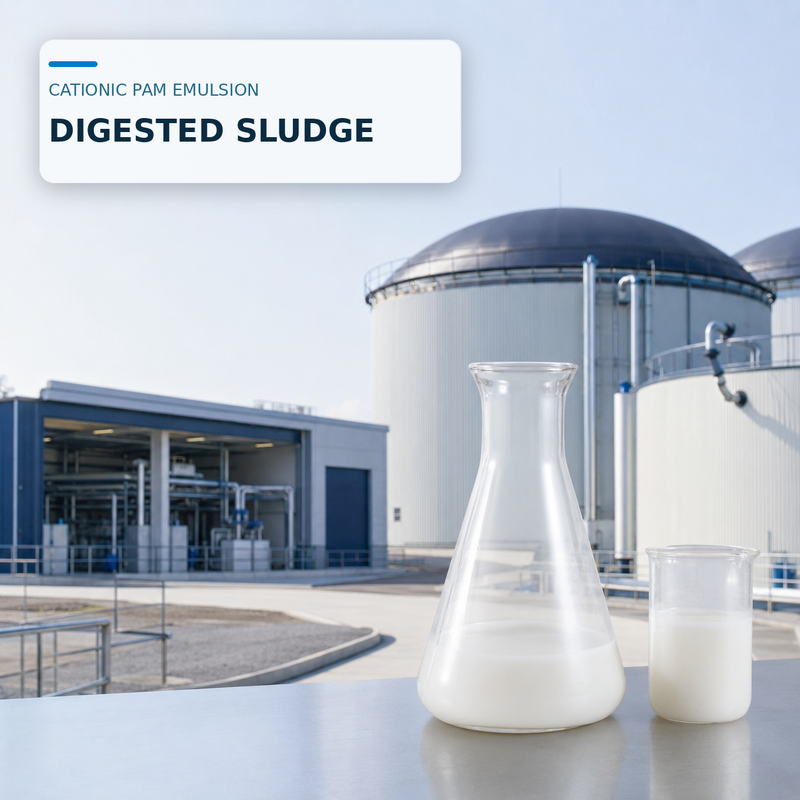
Created with Pixso. Cationic PAM Emulsion for Anaerobic Digested Sludge Dewatering

Cationic PAM Emulsion for Anaerobic Digested Sludge Dewatering

Brand Name: BLUWAT
Model Number: Blufloc Emulsion
MOQ: 1000kgs
Price: negotiable
Delivery Time: 5-10days
Detail Information
Place of Origin:
China
Certification:
ISO9001
Product Name:
Cationic Polyacrylamide Emulsion
Abbreviation:
CPAM Emulsion
Product Category:
Water-Soluble Polymer Flocculant
Chemical Type:
Cationic Polyacrylamide Copolymer
Physical Form:
Liquid Emulsion
Appearance:
Milky White Or Off-White Emulsion
Available Formulations:
Oil-Based Emulsion And Water-Based Emulsion
Molecular Weight:
High
Charge Degree:
Medium To Ultra-High
Main Functions:
Flocculation, Sludge Conditioning, Dewatering And Clarification
Packaging Details:
30kgs, 50kgs, 250kgs, 1250kgs drums
Product Description
Blufloc PAM Emulsion

High-Charge Cationic PAM Emulsion for Anaerobic Digested Sludge Dewatering

High-molecular-weight liquid polymer grades for anaerobic digested sludge with high organic content and variable charge demand, supporting improved water release, solids capture, return-stream quality, and biosolids handling.

Digested Biosolids High Organic Demand Improved Solids Capture Better Water Release

Product at a Glance

  • Product Cationic polyacrylamide emulsion
  • Application Anaerobic digested sludge
  • MW High
  • Charge Very high to ultra
  • Selection Laboratory and plant trial
Product Introduction

Conditioning Variable Anaerobic Digested Sludge

Anaerobic digestion changes cell structure, soluble organics, alkalinity, and bound water. These changes can increase polymer demand and make sludge response sensitive to feed composition, retention time, temperature, and upstream process stability.

A successful polymer program must handle day-to-day digestion variability without hiding mechanical problems or relying only on a higher dose. High-charge cationic emulsions are useful screening candidates because they can neutralize strong negative demand and bridge fine digested solids.

High-Charge CPAM for Digested Biosolids

Blufloc cationic PAM emulsion conditions anaerobic digested sludge with high organic content and variable charge demand.

High and very-high-charge grades can be screened for better water release, solids capture, return-stream quality, cake formation, and downstream biosolids handling.

Application Challenges

Common Digested Sludge Conditioning Problems

Digester condition, sludge chemistry, dosing equipment, and mechanical dewatering settings can all change the observed polymer response.

01

High Bound Water

Digested solids can retain substantial bound water, limiting free-water release and producing a weak or wet cake.

02

Variable Charge Demand

Digester upset, feed changes, retention time, and soluble organics can shift the optimum polymer grade and dose.

03

Return-Stream Solids

Fine solids escaping into centrate or filtrate increase recycle loading and can destabilize upstream treatment.

04

Interfering Conditions

Foam, struvite, contaminants, or deposits can disrupt pumps, dilution systems, mixing, and polymer delivery.

Treatment Mechanism

How the PAM Emulsion Works

High-charge cationic PAM reduces negative demand and bridges fine digested solids into dewaterable floc while preserving the open structure needed for water release.

Step 01

Charge Neutralization

Cationic sites adsorb onto negatively charged digested solids and reduce electrostatic repulsion between fine particles.

Step 02

Particle Bridging

High-molecular-weight chains connect destabilized particles, forming larger floc that can be separated mechanically.

Step 03

Mechanical Water Release

Correctly conditioned floc releases water under centrifuge, belt press, or screw press shear and compression.

Selection principle: High charge can improve solids capture, but excessive neutralization may produce tight or sticky floc and reduce water release. Charge level, molecular structure, active dose, and shear response must be optimized together.
Important: The suggested grades below are starting candidates rather than a fixed prescription. Final grade selection and dosage require representative laboratory testing and a controlled plant trial.
Grade Selection

Recommended Blufloc Screening Grades

Compare adjacent grades using the same representative sludge, active-mass basis, dilution water, preparation procedure, mixing, temperature, and dewatering conditions.

Grade Base Molecular Weight Charge Suggested Screening Role
EC 8060 Oil-based High Very high Core candidate for digested sludge with high organic charge demand.
EC 8080 Oil-based High Ultra Additional screen for exceptionally demanding digested sludge.
EWC 8060 Water-based High Very high Water-based candidate for compatible automated preparation and dosing systems.
Blufloc cationic EC and EWC series are classified as high molecular weight, while the anionic EA and EWA grades are classified as very high molecular weight. Exact active content, viscosity, commercial specification limits, shelf life, and preparation instructions should be confirmed using the current grade-specific TDS and order specification.
Product Advantages

Benefits for Digested Sludge Dewatering

01

High-Charge Options

Very-high and ultra-charge grades can be screened for strongly negative digested solids and elevated organic demand.

02

Fast Machine Response

Suitable candidates can be evaluated on centrifuge, belt press, or screw press feeds under representative shear.

03

Improved Capture

Correct conditioning can reduce fine solids in centrate or filtrate and lower return-stream loading.

04

Continuous Liquid Dosing

Pumpable emulsion format supports compatible automatic make-down and metering systems for continuous biosolids operation.

05

Screening and Scale-Up Support

Adjacent grades can be compared using customer samples and agreed laboratory and plant-trial performance indicators.

Application Process

Controlled Digested Sludge Trial Procedure

Record Digester Conditions

Record feed changes, digester temperature, retention time, stability indicators, sludge age, feed solids, and sampling time for every representative sample.

Screen Adjacent Charge Grades

Test at least one very-high-charge candidate, one higher-charge candidate, and a lower-charge comparator using the same active polymer mass basis and preparation conditions.

Evaluate Water Release and Shear

Compare free-water release, solids capture, floc openness, and floc resilience under shear representative of the intended dewatering machine.

Run a Controlled Machine Trial

Confirm sludge feed solids, polymer preparation, pump calibration, addition point, mixing, and equipment settings before changing one variable at a time.

Define Re-Screening Triggers

Set operating limits that trigger a dose review or new screening after a digester upset, major feed change, seasonal shift, or persistent solids-capture decline.

Product Selection Guidance

EC 8060 is a sensible starting candidate for anaerobic digested sludge with high organic charge demand.

Compare EC 8080 to determine whether still higher cationic charge improves capture without sacrificing drainage or floc openness.

Keep a lower-charge comparator in the program because the optimum can shift when digestion performance, soluble organics, feed composition, or temperature changes.

Compare Active Polymer Mass and Total Operating Cost

Neat-emulsion price per kilogram can be misleading when products differ in active content, preparation efficiency, activation, working dose, and equipment throughput.

The comparison should also include cake or underflow quality, solids capture, return-stream TSS, equipment throughput, polymer use, operator adjustment, and downstream biosolids disposal cost.

Performance Evaluation

Operating Indicators to Record

Cake Solids
Solids Capture
Return-Stream TSS
Polymer Use
Digester Condition
Troubleshooting

Investigate Digester and Dosing Changes Before Increasing the Dose

When polymer consumption rises abruptly, check digestion health, recent feed changes, soluble organics, sludge temperature, feed solids, dilution-water conditions, and dosing-equipment calibration.

Increasing the dose may temporarily improve centrate or filtrate appearance while masking a digester upset, a change in sludge chemistry, incomplete emulsion activation, or upstream process instability.

Inspect foam, struvite, deposits, contaminants, pumps, dilution water, injection, mixing, and dewatering-machine settings before concluding that the grade itself is no longer suitable.

Supply Options

Packaging

25 kg Container
200 kg Plastic Drum
1000 kg IBC
Safe Handling

Storage and Handling

  • Keep the original package tightly sealed.
  • Store in a cool, dry, and ventilated area.
  • Protect the emulsion from direct sunlight.
  • Prevent freezing and exposure to excessive heat.
  • Follow the grade-specific TDS and SDS for shelf life, handling limits, storage, and transport classification.
  • Contain and clean spills promptly because wet polymer can make floors extremely slippery.
25+ Years Water-treatment chemical manufacturing experience supported by three modern production plants.
100+ Markets Products supplied to customers in more than 100 countries and regions.
Manufacturer Support

Why Choose Bluwat Chemicals

  • More than 25 years of water-treatment chemical manufacturing experience supported by three modern production plants.
  • More than 800,000 tons delivered and exports to over 100 countries and regions, according to the company website.
  • Factory-direct coordination for grade selection, batch documentation, packaging, and export logistics.
  • Laboratory screening support using representative customer sludge or wastewater samples.
  • Recommendations developed according to actual water release, solids capture, cake, return-stream, throughput, and operating-cost objectives.
  • TDS, SDS, COA, and applicable certification documents available for the selected grade and destination market.
Technical Service

Quality Control and Technical Support

01

Specification Confirmation

Confirm the required commercial grade specification and order documentation before production and shipment.

02

Representative Sample Screening

Shortlist products under realistic pH, temperature, solids, dilution-water chemistry, and shear conditions.

03

Preparation Recommendation

Provide make-down, dilution, activation, dosing, injection, and scale-up guidance for the selected grade.

04

Plant-Trial Review

Review trial data and adjust charge level, dose, addition point, mixing conditions, machine settings, or equipment loading.

Frequently Asked Questions

Anaerobic Digested Sludge PAM Emulsion FAQ

Why can digested sludge require more cationic charge?

Digestion can expose or release negatively charged soluble organics and fine particles, increasing the charge demand required for effective conditioning and solids capture.

Is ultra-high cationic charge always the best choice?

No. Ultra-high charge is a screening option for exceptionally demanding sludge. Drainage, floc structure, capture, active dose, and total operating cost must also be evaluated.

Should digester data be recorded during a polymer trial?

Yes. Temperature, retention time, feed changes, stability indicators, soluble-organic conditions, and feed-solids concentration help explain shifts in polymer response.

Can the same PAM grade be used after a digester upset?

It may still work, but a temporary dose adjustment or re-screening may be necessary when sludge chemistry changes significantly. Confirm the cause before increasing dose.

Digested Sludge Polymer Screening and Trial Support

For anaerobic digested sludge conditioning, Bluwat can screen adjacent PAM emulsion grades, review preparation and dosing conditions, and help define a controlled plant-trial plan using water release, cake solids, solids capture, return-stream TSS, polymer use, digester condition, and active polymer cost as agreed performance indicators.